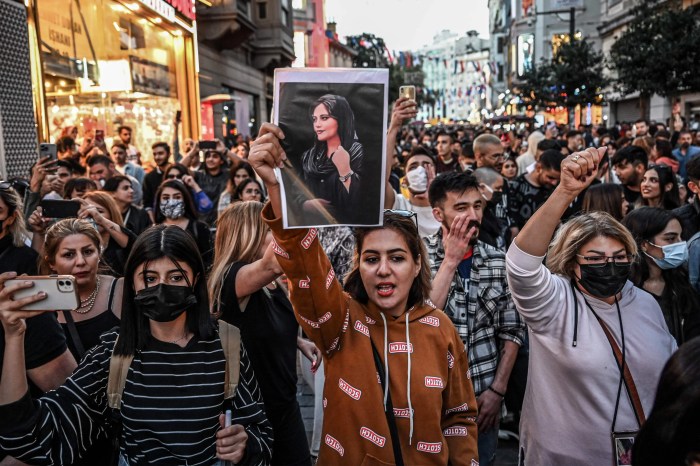
Iran News: Understanding the complexities of Iran requires navigating a multifaceted landscape of political maneuvering, economic sanctions, social unrest, and international relations. This overview delves into the key aspects shaping Iran’s current trajectory, from its nuclear program and economic struggles to its intricate regional alliances and internal social dynamics. We will explore the historical context and the current state of affairs, providing a balanced perspective on this pivotal nation.
From the ongoing debates surrounding its nuclear ambitions and the impact of international sanctions on its economy, to the internal political power struggles and the evolving social landscape, Iran presents a dynamic and often contradictory picture. This analysis aims to unravel these complexities, offering a clear and insightful understanding of the issues at play and their global implications.
Iran’s Nuclear Program
Iran’s nuclear program remains a significant point of international contention, balancing the country’s stated right to peaceful nuclear energy with global concerns about potential weapons development. The program’s evolution has been marked by periods of cooperation and confrontation, shaped by shifting geopolitical dynamics and international sanctions.
Current Status of Iran’s Nuclear Enrichment Program
As of late 2023, Iran’s uranium enrichment capabilities have significantly advanced beyond the limitations set by the 2015 Joint Comprehensive Plan of Action (JCPOA), also known as the Iran nuclear deal. Following the US withdrawal from the JCPOA in 2018 and the subsequent re-imposition of sanctions, Iran has steadily increased its enrichment levels and stockpile of enriched uranium. While Iran maintains its enrichment activities are for peaceful purposes, the increased capacity raises concerns among many world powers. The exact level of enrichment and the size of the stockpile are subject to ongoing debate and differing assessments from international monitoring agencies.
International Sanctions Related to Iran’s Nuclear Activities
Numerous international sanctions have been imposed on Iran in response to its nuclear program. These sanctions, primarily led by the United Nations Security Council, the United States, and the European Union, target various sectors of the Iranian economy, including its oil exports, banking system, and access to international financial markets. The sanctions aim to pressure Iran to curb its nuclear activities and return to compliance with international non-proliferation agreements. The effectiveness of these sanctions remains a subject of ongoing discussion, with Iran adapting its economic strategies and finding ways to circumvent some restrictions.
Differing Perspectives of World Powers Regarding Iran’s Nuclear Ambitions
World powers hold diverse perspectives on Iran’s nuclear ambitions. Some countries, particularly those with close ties to Iran or those prioritizing regional stability, express concerns about the potential consequences of overly aggressive sanctions and advocate for diplomatic engagement and a negotiated solution. Others, particularly those prioritizing nuclear non-proliferation, emphasize the need for stricter enforcement of sanctions and a more assertive approach to prevent Iran from acquiring nuclear weapons capabilities. This divergence in perspectives complicates international efforts to address the issue and often leads to protracted negotiations and diplomatic stalemates.
Timeline of Key Events in the Iranian Nuclear Program Since 2000, Iran news
The Iranian nuclear program’s history since 2000 is complex and characterized by fluctuating levels of international cooperation and tension. A detailed chronological account would be extensive, but key events include:
- 2002: Revelations of Iran’s previously undisclosed uranium enrichment program spark international concern.
- 2003-2005: Negotiations between Iran and the European Union (EU-3) begin, aiming to address international concerns.
- 2006: The UN Security Council imposes the first sanctions on Iran related to its nuclear program.
- 2010: Further sanctions are imposed as Iran continues to expand its enrichment capabilities.
- 2015: The JCPOA is signed, providing for the lifting of sanctions in exchange for limitations on Iran’s nuclear program.
- 2018: The United States withdraws from the JCPOA, leading to the re-imposition of sanctions and Iran’s subsequent scaling back of its commitments under the agreement.
- 2020-Present: Negotiations to revive the JCPOA continue, but remain stalled due to disagreements between Iran and the remaining parties.
Iranian Economy and Sanctions
The Iranian economy has faced significant challenges in the last five years, navigating a complex landscape shaped by internal policies and the weight of international sanctions. Understanding its performance requires considering both the inherent vulnerabilities and the external pressures that have consistently impacted its growth trajectory.
The Iranian economy’s performance over the past five years has been characterized by volatility. While periods of relative stability have existed, the overall trend reflects a struggle to achieve consistent and sustainable growth. Factors contributing to this include fluctuations in oil prices, the ongoing impact of sanctions, and internal economic policies.
Impact of International Sanctions on the Iranian Economy
International sanctions, particularly those related to Iran’s nuclear program, have profoundly impacted various sectors of the Iranian economy. The oil and gas industry, a cornerstone of the Iranian economy, has suffered considerably, limiting its export capacity and revenue generation. This has had a ripple effect, hindering investment in other sectors and contributing to overall economic stagnation. Furthermore, sanctions have restricted access to international financial markets, making it difficult for Iranian businesses to secure loans and engage in international trade. The banking sector, in particular, has faced significant challenges in conducting international transactions. The automotive industry, reliant on imported parts and technology, has also been severely impacted, leading to production cuts and job losses.
Strategies Employed by Iran to Circumvent Sanctions
Facing significant economic constraints, Iran has implemented various strategies to mitigate the impact of sanctions. These strategies include developing alternative trade routes, enhancing barter systems, and strengthening regional economic partnerships. Iran has actively pursued bilateral trade agreements with countries willing to bypass the sanctions regime, fostering economic ties with nations like China, Russia, and some countries in the region. The development of cryptocurrency and other decentralized financial systems has also been explored as a means of circumventing traditional banking channels. Furthermore, Iran has invested in domestic production to reduce its reliance on imports, focusing on self-sufficiency in strategic sectors.
Comparison of Iranian Economic Policies with Those of Other Countries in the Region
Iran’s economic policies differ significantly from those of its regional counterparts. While some countries in the region have embraced neoliberal economic models emphasizing privatization and free markets, Iran maintains a more state-controlled economy with a significant role for public sector enterprises. This approach has both advantages and disadvantages. While it can provide stability and control over strategic sectors, it can also stifle innovation and competition. Compared to countries like the UAE or Saudi Arabia, which have diversified their economies away from oil, Iran’s reliance on hydrocarbons remains a significant vulnerability. However, Iran’s emphasis on self-sufficiency and regional partnerships offers a distinct economic strategy compared to its neighbors, who often have stronger ties to global markets. The level of government intervention and the approach to economic diversification vary considerably across the region, reflecting differing political and economic priorities.
Political Landscape in Iran: Iran News
Iran’s political system is a complex interplay of religious authority and elected officials, resulting in a unique power dynamic. Understanding this system requires examining the key players and processes that shape Iranian politics. The influence of various factions and the roles of the Supreme Leader and President are crucial elements in navigating this landscape.
Major Political Factions and Their Influence
The Iranian political landscape is broadly characterized by several key factions, although the lines between them are often blurred and alliances shift. These factions often represent different ideological stances and priorities, influencing policy decisions and the direction of the government. For example, the principalist faction generally favors a more conservative and religiously-oriented approach to governance, emphasizing traditional values and a strong role for the clergy. In contrast, reformist factions advocate for greater political and social freedoms, often pushing for economic liberalization and improved relations with the international community. The power balance between these factions fluctuates, impacting the political climate and the implementation of policies. The level of influence held by each faction is often dependent on the specific issue at hand and the prevailing political context.
The Role of the Supreme Leader and the President
The Supreme Leader, currently Ayatollah Ali Khamenei, holds ultimate authority in Iran. He is the head of the Islamic Republic and commands the military, appoints key officials (including the head of the judiciary), and has significant influence over policymaking. The President, elected by popular vote, is the head of government and responsible for implementing policies. While the President’s role is significant, their power is ultimately subordinate to the Supreme Leader. This division of power ensures that even elected officials operate within the framework defined by the religious leadership. The Supreme Leader’s authority is derived from his position as the highest religious authority, while the President’s legitimacy stems from the electoral process. The relationship between these two powerful figures shapes the political trajectory of the nation.
Iranian Elections and Their Outcomes
Iranian elections, while involving popular votes, are conducted within a framework that prioritizes the screening of candidates and ensures that they align with the overall religious and ideological principles of the system. The Guardian Council, a body appointed by the Supreme Leader, vets candidates for presidential, parliamentary, and other key elections. This process often leads to the disqualification of candidates perceived as insufficiently aligned with the system’s ideology. The outcomes of these elections, therefore, often reflect the balance of power between various factions, with the influence of the Supreme Leader playing a significant role in shaping the overall results. While elections provide a degree of popular participation, the vetting process and the ultimate authority of the Supreme Leader fundamentally shape the electoral landscape.
Significant Political Events in the Past Year
The past year in Iranian politics has witnessed a complex interplay of internal and external factors. Protests sparked by the death of Mahsa Amini in September 2022 led to widespread demonstrations across the country, highlighting underlying social and political tensions. The government’s response to these protests, characterized by a crackdown on dissent, further exacerbated existing divisions within Iranian society. Simultaneously, ongoing negotiations regarding Iran’s nuclear program continued to shape the country’s relationship with the international community, influencing domestic politics and economic policies. These events, along with economic challenges and regional geopolitical shifts, have created a dynamic and volatile political environment in Iran.
Social Issues and Public Opinion in Iran

Iranian society faces a complex interplay of social issues, shaped by religious conservatism, economic hardship, and political restrictions. Understanding public opinion requires acknowledging the limitations on free expression and the diverse ways Iranians navigate these constraints to voice their concerns. This section examines key social challenges, methods of expressing public sentiment, and recent examples of social movements.
Major Social Issues Facing Iranians
Iranians grapple with a range of significant social issues. High unemployment, particularly among youth, contributes to economic hardship and social unrest. Inflation and the devaluation of the rial erode purchasing power, impacting access to essential goods and services. Gender inequality remains a persistent concern, with limitations on women’s participation in public life and the legal system. Access to quality healthcare and education varies significantly across the country, exacerbating existing social disparities. Environmental concerns, including water scarcity and air pollution in major cities, are also increasingly prominent. Finally, the restrictions on personal freedoms, including limitations on artistic expression and social gatherings, contribute to widespread feelings of frustration and disillusionment.
Expression of Public Opinion in Iran
Given the limitations on freedom of speech and assembly, Iranians employ various strategies to express their opinions. Social media, despite government surveillance and censorship, remains a crucial platform for disseminating information and mobilizing public sentiment. Subtle forms of protest, such as participation in mourning ceremonies or utilizing artistic expression, often carry political undertones. Religious discourse, while subject to official interpretations, can also be a space for challenging existing power structures. Furthermore, participation in elections, even with limited choices, can be a means of expressing preferences and discontent. However, it’s crucial to understand that open dissent can carry significant personal risks, including arrest and imprisonment.
Recent Social Movements and Protests
Recent years have witnessed several significant social movements and protests in Iran. The 2019 protests, sparked by fuel price hikes, spread rapidly across the country, highlighting widespread economic grievances. These demonstrations, often characterized by their decentralized nature and use of social media, showcased the resilience of Iranian civil society in the face of state repression. Earlier protests, such as the 2009 Green Movement, although ultimately suppressed, demonstrated the potential for large-scale mobilization around political issues. More recently, smaller-scale protests have emerged focusing on specific grievances, such as environmental concerns or human rights violations. These often utilize encrypted messaging apps and carefully planned strategies to avoid detection.
Freedom of Expression in Iran Compared to Other Middle Eastern Countries
Compared to other countries in the Middle East, Iran’s level of freedom of expression is relatively restricted. While some countries in the region have experienced periods of greater openness, Iran consistently ranks lower on international indices measuring freedom of speech and press. Countries like Tunisia, despite facing their own challenges, have seen periods of greater political liberalization and wider space for public discourse. However, other countries in the region, such as Saudi Arabia or Syria, exhibit even stricter controls on freedom of expression. The level of freedom of expression varies significantly across the Middle East, influenced by political systems, religious factors, and levels of social and political mobilization.
Iran’s Relations with Regional Powers
Iran’s foreign policy in the Middle East is characterized by a complex interplay of competition and cooperation with regional powers. Its relationships are often shaped by historical grievances, ideological differences, and competition for influence, particularly with Saudi Arabia. Understanding these dynamics is crucial to comprehending the broader geopolitical landscape of the region.
Iran-Saudi Arabia Relations
The relationship between Iran and Saudi Arabia is marked by deep-seated rivalry stemming from sectarian differences (Shia-Sunni divide), competition for regional dominance, and proxy conflicts. Points of conflict include support for opposing sides in regional wars (Yemen, Syria), accusations of interference in each other’s internal affairs, and ideological clashes. However, there have been limited instances of cooperation, primarily driven by shared interests in oil prices and regional stability, albeit often fragile and short-lived. Recent attempts at dialogue suggest a potential shift, though significant hurdles remain. The 2023 agreement brokered by China to restore diplomatic ties represents a major step forward, but the long-term implications remain to be seen.
Comparison of Iranian Foreign Policy with Other Regional Powers
Iran’s foreign policy prioritizes regional influence and the advancement of its perceived national interests. This often involves supporting allied groups, directly or indirectly engaging in regional conflicts, and leveraging its economic and military capabilities. Compared to other regional powers like Turkey or the United Arab Emirates, Iran’s approach is more assertive and less focused on traditional diplomacy, although all three utilize a blend of hard and soft power. Turkey, for instance, often utilizes its historical ties and cultural influence to expand its regional reach, while the UAE focuses on economic partnerships and investments. These differences in approach reflect variations in national interests, capabilities, and geopolitical priorities.
Iran’s Involvement in Regional Conflicts: The Yemen War
Iran’s involvement in the Yemen War is a significant example of its regional engagement. While Iran denies direct military intervention, it is widely believed to provide significant support to the Houthi rebels, including financial aid, weapons, and training. This support has significantly prolonged the conflict and exacerbated humanitarian suffering. Iran’s actions are driven by its desire to counter Saudi Arabia’s influence in Yemen and the broader region, showcasing its willingness to engage in proxy conflicts to achieve its geopolitical objectives. This involvement has drawn international condemnation and contributed to the ongoing instability in Yemen.
Iran’s Diplomatic Relations with Neighboring Countries
| Country | Relationship Status | Key Aspects |
|---|---|---|
| Iraq | Complex, with elements of cooperation and competition | Shared religious and cultural ties, but also competition for influence within Iraq’s political system. |
| Turkey | Strained, with periods of cooperation and conflict | Competition for regional influence, particularly in Syria and Iraq, coupled with economic and cultural exchanges. |
| Pakistan | Generally positive, with growing cooperation | Strong historical and cultural ties, increased economic and security cooperation. |
| Afghanistan | Complex and evolving, with historical ties and recent challenges | Influence over Shia communities, concerns regarding regional security and stability following the Taliban takeover. |
| Turkmenistan | Generally stable and cooperative | Economic ties, particularly regarding energy resources and trade. |
| Armenia | Positive, with growing economic and cultural ties | Increasing economic cooperation and cultural exchange. |
| Azerbaijan | Complex, with periods of tension and cooperation | Disputes over territorial issues, coupled with economic and energy cooperation. |
| Oman | Generally positive and cooperative | Long-standing diplomatic relations, playing a mediating role in regional disputes. |
| United Arab Emirates | Complex, with periods of tension and recent attempts at de-escalation | Competition for regional influence, particularly in the Gulf, but also some economic cooperation. |
Iran and the United States
The relationship between Iran and the United States has been complex and often fraught with tension, marked by periods of cooperation and intense hostility. This dynamic history is rooted in a confluence of geopolitical interests, ideological differences, and significant historical events. Understanding this relationship requires examining its evolution from periods of relative cordiality to the current state of deep mistrust and limited engagement.
The current state of relations between the two countries is characterized by deep distrust and a lack of formal diplomatic ties. While there have been periods of indirect engagement, primarily through intermediaries on issues such as the Iran nuclear program, direct communication and cooperation remain severely limited. Sanctions imposed by the United States, along with Iranian actions perceived as destabilizing in the region, contribute to the strained relationship. This lack of direct communication significantly hinders efforts to resolve disagreements and address shared concerns.
The Impact of the JCPOA on US-Iran Relations
The Joint Comprehensive Plan of Action (JCPOA), also known as the Iran nuclear deal, significantly impacted US-Iran relations, albeit temporarily. Initially, the agreement led to a period of reduced tensions, as Iran limited its uranium enrichment program in exchange for sanctions relief. However, the Trump administration’s withdrawal from the JCPOA in 2018 and the subsequent reimposition of sanctions reversed this progress, plunging the relationship back into a state of confrontation. The Biden administration has expressed a willingness to re-enter the agreement under certain conditions, but significant obstacles remain. The JCPOA’s impact underscores the fragility of diplomatic progress in the face of shifting political priorities and domestic pressures within both countries.
Recent Diplomatic or Military Interactions
Recent interactions between the US and Iran have been largely indirect and characterized by a mixture of tension and cautious engagement. For example, negotiations related to the JCPOA have involved indirect talks facilitated by other countries. Meanwhile, military incidents, such as the alleged Iranian attacks on oil tankers in the Strait of Hormuz and the US drone strike that killed Iranian General Qassem Soleimani, have heightened tensions and underscored the potential for escalation. These events highlight the ongoing challenges in managing the complex and often unpredictable relationship between the two nations. The lack of a direct diplomatic channel often leads to miscalculations and increases the risk of unintended consequences.
Human Rights in Iran
Iran’s human rights record has been a subject of significant international concern for many years. While the Iranian constitution guarantees certain fundamental rights, the practical implementation and enforcement of these rights are often severely lacking, leading to widespread criticism from human rights organizations and governments worldwide. This section will examine key areas of concern, the role of international actors, and the challenges faced by those advocating for human rights within Iran.
Freedom of Expression and Assembly
Restrictions on freedom of expression and assembly are pervasive in Iran. Journalists, bloggers, and activists face constant threats of arrest, imprisonment, and even extrajudicial killings for expressing dissenting views or organizing protests. The government tightly controls the media landscape, limiting access to independent news sources and censoring online content. Protests, even peaceful ones, are frequently met with violent crackdowns by security forces. The harsh penalties for exercising these fundamental freedoms significantly stifle any form of opposition or critical commentary. For instance, the imprisonment of numerous journalists and bloggers for reporting on sensitive issues highlights the severe limitations on freedom of expression.
Women’s Rights
Women in Iran face significant discrimination in various aspects of life. While women have access to education and employment, they are often subjected to discriminatory laws and social norms. The mandatory hijab law, requiring women to wear headscarves in public, is a major point of contention and a symbol of broader restrictions on women’s freedoms. Women also face unequal treatment in legal matters, such as divorce and child custody cases. Discrimination in the workplace, limited access to certain professions, and the lack of equal pay are further examples of the ongoing challenges faced by women in Iran.
Religious Freedom
While Islam is the official religion of Iran, the government’s treatment of religious minorities has drawn considerable criticism. Members of religious minorities, such as Baha’is, Christians, and Zoroastrians, often face persecution, discrimination, and restrictions on their religious practices. This includes limitations on building places of worship, restrictions on religious education, and the denial of basic rights and freedoms based on their religious beliefs. The systematic targeting of religious minorities underscores the lack of religious tolerance within the country.
Treatment of Political Prisoners
Iran has a significant number of political prisoners who are often subjected to torture, ill-treatment, and unfair trials. Many are held without charge or access to legal representation. Conditions in Iranian prisons are often described as deplorable, with reports of overcrowding, inadequate healthcare, and denial of basic necessities. The use of the death penalty, often for politically motivated charges, is another significant human rights concern. The lack of due process and the prevalence of torture represent grave violations of international human rights standards.
Role of International Organizations
Several international organizations, including the United Nations Human Rights Council and Amnesty International, regularly monitor the human rights situation in Iran and issue reports documenting abuses. These organizations often call on the Iranian government to uphold its international human rights obligations and investigate allegations of human rights violations. However, the Iranian government’s lack of cooperation with international investigations and its refusal to acknowledge many of the documented abuses significantly limits the effectiveness of these efforts. The UN Special Rapporteur on the situation of human rights in Iran plays a key role in reporting on human rights violations, but access to the country remains limited.
Challenges Faced by Human Rights Activists and Journalists
Human rights activists and journalists in Iran operate in a highly restrictive environment. They face constant surveillance, harassment, arrest, and imprisonment. Many are forced into exile or self-censorship to avoid persecution. The risks associated with documenting and reporting on human rights abuses are immense, yet despite these dangers, many individuals continue to work tirelessly to expose violations and advocate for change. Their courage and resilience in the face of oppression are noteworthy, although the systemic repression severely limits their ability to operate freely and effectively.
Iranian Culture and Society
Iranian culture, a tapestry woven from millennia of history and interaction with diverse civilizations, boasts a rich and multifaceted character. Its evolution reflects the impact of empires like the Achaemenid, Parthian, and Sasanian, as well as the later arrival and influence of Islam. This blend of indigenous traditions and external influences has shaped a unique cultural identity that continues to evolve in the modern era.
The Diversity of Iranian Culture and its Historical Influences
Iran’s cultural landscape is far from monolithic. Significant regional variations exist, reflecting distinct linguistic, ethnic, and tribal identities. The country’s geography, with its diverse climates and landscapes, has also contributed to this cultural mosaic. For instance, the nomadic tribes of the central plateau have maintained unique traditions and lifestyles that differ significantly from those of the settled populations in urban centers like Tehran or Isfahan. The legacy of ancient Persia is visible throughout the country, from the architectural marvels of Persepolis to the intricate designs of traditional carpets. The impact of successive empires is also evident in the country’s artistic styles, religious practices, and social structures. The influence of Greek, Roman, and Arab cultures, alongside indigenous Persian traditions, has created a uniquely layered cultural heritage.
The Role of Religion in Iranian Society and its Impact on Daily Life
Islam, predominantly Shia Islam, plays a central role in Iranian society, shaping many aspects of daily life, from personal conduct and family structures to legal systems and social interactions. Religious observances, such as the daily prayers, fasting during Ramadan, and the commemoration of religious holidays, are integral to the lives of many Iranians. Religious institutions, including mosques, seminaries, and religious foundations, wield significant influence in various spheres of life. However, it’s crucial to understand that religious practice and belief vary widely across the population, with a spectrum of interpretations and levels of adherence. The interaction between religious beliefs and secular aspects of life is a complex and evolving dynamic in contemporary Iran.
Examples of Traditional Iranian Art, Music, and Literature
Traditional Iranian art forms are renowned for their exquisite craftsmanship and intricate details. Miniature painting, with its delicate brushwork and vibrant colors, is a celebrated art form, often depicting scenes from Persian epics or historical events. Carpet weaving, a long-standing tradition, produces carpets that are prized worldwide for their intricate designs and high quality. Traditional Iranian music, characterized by its melodic complexity and rhythmic sophistication, features instruments such as the tar (a long-necked lute) and the setar (a three-stringed instrument). Persian poetry, with its rich history and profound philosophical depth, has influenced literature across the globe. The works of poets like Rumi and Hafez continue to resonate with readers today, offering timeless insights into the human condition.
Visual Representation of Iranian Cultural Symbols
Imagine a majestic lion, a symbol of power and royalty, standing proudly amidst intricate floral patterns, reminiscent of the gardens of paradise. A vibrant, intricately woven Persian carpet, a testament to artistic skill and cultural heritage, lies beneath its paws. Above, the celestial dome of a mosque, adorned with turquoise tiles and calligraphy, represents the spiritual heart of the nation. This composite image encapsulates elements of strength, beauty, artistry, and spirituality, all integral components of Iranian cultural identity.
Iran’s Military Capabilities
Iran possesses a multifaceted military structure encompassing the Islamic Revolutionary Guard Corps (IRGC), the regular army (Artesh), and the air force, navy, and aerospace forces. While the regular army maintains a more conventional role, the IRGC, with its extensive paramilitary and unconventional warfare capabilities, holds significant influence and plays a crucial role in Iran’s regional strategy. This complex arrangement reflects Iran’s unique geopolitical position and security concerns.
The Structure and Capabilities of the Iranian Military
The Iranian military is a complex organization, reflecting both its conventional and unconventional warfare doctrines. The Artesh (regular army) is responsible for conventional warfare operations and maintains a relatively modern, if smaller, ground force compared to some regional rivals. The IRGC, however, is a powerful and separate entity with its own ground, naval, and air forces, focusing on asymmetric warfare, intelligence gathering, and regional influence operations. The IRGC’s Quds Force, its external operations arm, is particularly known for its influence across the Middle East. This dual military structure allows Iran to engage in a range of conflicts and strategies, from conventional to proxy warfare. The Iranian air force operates a mix of older and more modern aircraft, while its navy focuses on coastal defense and regional projection capabilities. The aerospace force is responsible for Iran’s ballistic missile program.
Iran’s Missile Program and its Implications for Regional Security
Iran’s ballistic missile program is a significant aspect of its military capabilities and a major source of regional concern. It possesses a range of short, medium, and potentially longer-range ballistic missiles, some capable of carrying conventional and potentially nuclear warheads. The development and deployment of these missiles are viewed by many regional states and Western powers as a destabilizing factor, raising concerns about potential escalation and the proliferation of ballistic missile technology. The program’s accuracy and range continue to evolve, presenting a growing threat to neighboring countries and potentially beyond. The program’s expansion is often linked to Iran’s desire to deter potential external aggression and project power within the region.
Iran’s Military Alliances and Partnerships
Iran maintains strategic partnerships with several regional actors, bolstering its military influence. These relationships are often based on shared ideological alignments, geopolitical interests, or mutual security concerns. Significant alliances include those with groups like Hezbollah in Lebanon, various Shia militias in Iraq, and the Houthis in Yemen. These partnerships provide Iran with proxy forces for regional influence, reducing its direct military exposure while still projecting power. The nature and extent of these alliances are constantly evolving, influenced by regional dynamics and power shifts.
Comparison of Iran’s Military Strength with Other Regional Powers
Comparing Iran’s military strength with other regional powers requires a nuanced approach, considering both conventional and unconventional capabilities. While Iran does not possess the same level of advanced weaponry or overall military budget as some regional rivals like Saudi Arabia or Israel, its asymmetric warfare capabilities, extensive missile program, and network of regional allies give it significant influence. Iran’s military strength is not solely measured by its conventional arsenal but also by its capacity for unconventional warfare, proxy conflicts, and its ability to disrupt regional stability. This makes a straightforward comparison difficult and dependent on the specific metric being used.
Outcome Summary
Iran’s influence on the global stage remains undeniable, its internal struggles deeply intertwined with international relations. The future trajectory of Iran hinges on a complex interplay of domestic policies, international pressures, and regional dynamics. Understanding the current situation, as presented here, is crucial for comprehending the potential for both stability and conflict in the region and beyond. The ongoing challenges demand continued observation and critical analysis to fully grasp the evolving narrative of this significant nation.
Recent reports on Iran’s nuclear program have dominated headlines. For broader global perspectives beyond just Iranian affairs, checking reputable sources like msn news is beneficial. This allows for a more comprehensive understanding of international relations and how current events in Iran impact the wider world stage. Understanding the context is crucial for accurate analysis of Iran news.
Recent developments in Iran, particularly concerning its nuclear program, have understandably drawn significant international attention. Understanding the complexities of this situation often requires considering the perspectives of major global players, including the United States, whose policies are detailed in news coverage of the federal government of the united states news. The US government’s stance, in turn, significantly impacts the international response to Iran’s actions and future negotiations.


